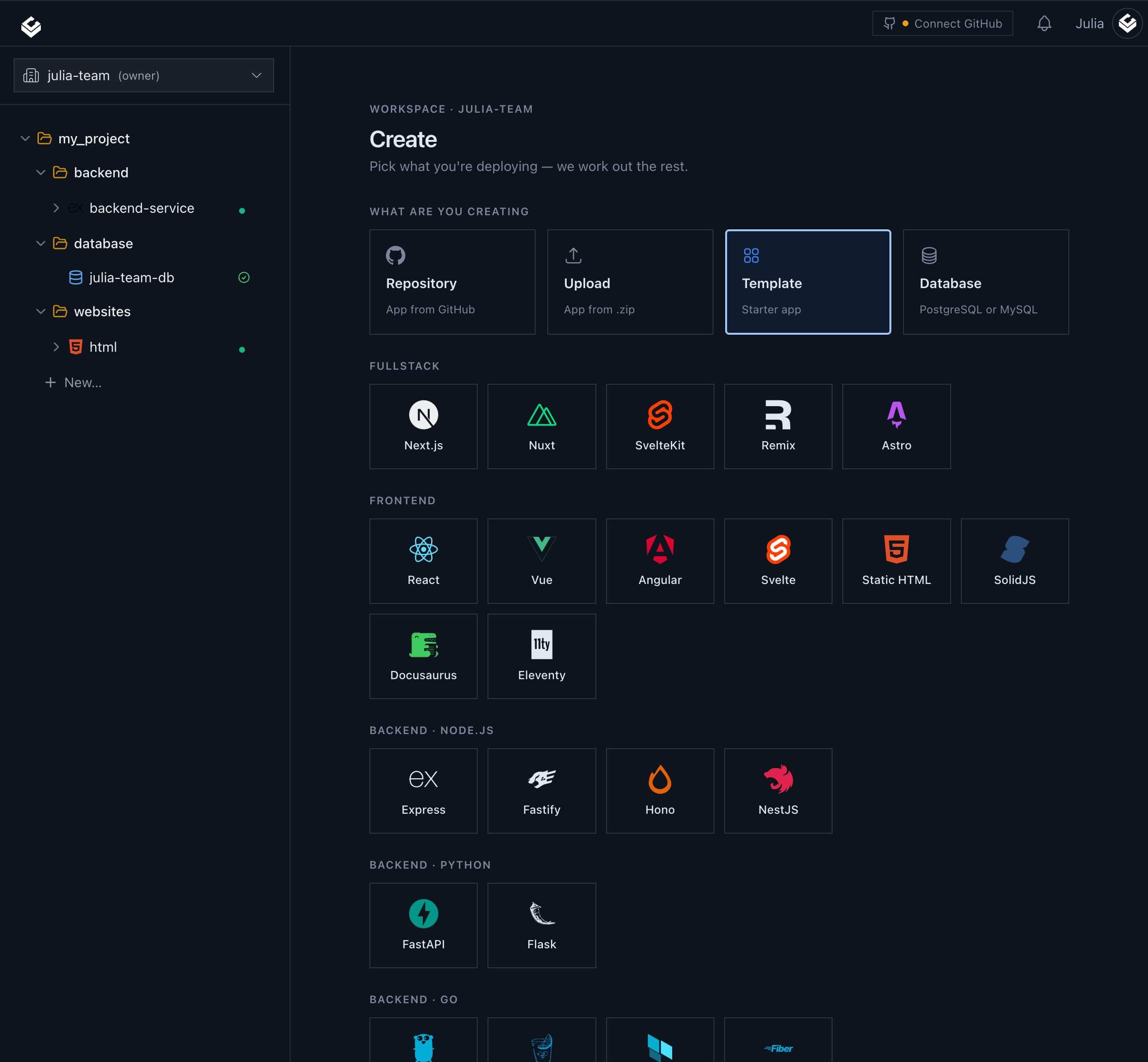
Light Cloud is a modern cloud deployment platform designed to make it easier for developers to build, deploy, and manage full-stack web applications directly from GitHub. Its main idea is simple: developers connect a GitHub repository, push their code, and Light Cloud automatically builds and deploys the application. The platform supports static websites, containerized applications, and managed PostgreSQL databases, bringing the frontend, backend, and database infrastructure together within a single project. This makes Light Cloud particularly useful for developers who want a streamlined deployment workflow without having to manually configure multiple cloud services. One of the platform's central features is GitHub-based deployment. Once a repository is connected, every new push can trigger a build and deployment automatically. Light Cloud detects the project and determines whether it should be deployed as a static site or as a container running on Cloud Run. Each deployment keeps information such as the associated commit, author, build time, and deployment logs, giving developers a clear history of what has been shipped and when. Light Cloud also provides preview environments for development teams. Every Git branch and pull request can receive its own live preview URL. These environments are automatically built when changes are pushed, allowing developers to test new features or review changes before merging them into production. When a branch is deleted, its associated preview can be removed as well. This workflow makes it easier for teams to collaborate, review pull requests, and experiment without putting the production application at risk. Another important component of Light Cloud is its managed PostgreSQL service. Developers can provision a database directly within the same project by selecting a database tier, region, and storage size. The platform handles the database credentials securely and connects them to the application, reducing the amount of infrastructure configuration developers need to perform manually. By combining application hosting with managed PostgreSQL, Light Cloud aims to provide a more complete environment for full-stack applications. For containerized applications, Light Cloud uses Cloud Run and supports scale-to-zero behavior. When a container is idle, it can stop running, which means developers are not charged for compute time when the application is not actively being used. This can be particularly useful for smaller applications, development environments, preview deployments, and workloads with irregular traffic. Static websites, meanwhile, can be delivered through a global CDN for fast access from different locations. The platform also places significant emphasis on AI-assisted development and deployment. Its MCP server allows Claude to interact with Light Cloud directly from a conversation. Through this integration, Claude can create applications, deploy them, and read application logs without requiring the developer to constantly open a cloud dashboard. Light Cloud also provides a VS Code extension that integrates with GitHub Copilot and introduces commands such as /deploy, /status, and /plan. Framework detection and environment variable parsing are designed to happen automatically, further reducing deployment friction. Observability is another part of the platform. Developers can monitor build output, application logs, and metrics from the same environment where their applications are deployed. Instead of relying on several separate monitoring tools, Light Cloud keeps deployment information and runtime observability together. This allows developers to follow an application from the initial build through its running state and investigate problems using the available logs and metrics. Light Cloud also has a Labs section dedicated to experimental and open-source infrastructure tools. One notable project is ICE, an open-source visual cloud editor that allows users to design cloud infrastructure on a canvas, preview estimated costs, and deploy infrastructure to their own cloud accounts. ICE, along with its blocks and templates, is available under the Apache 2.0 license, making it a separate open-source component of the broader Light Cloud ecosystem. Overall, Light Cloud positions itself as a developer-oriented cloud platform focused on simplifying the path from source code to production. By combining GitHub deployments, static hosting, containers, managed PostgreSQL, automatic preview environments, scale-to-zero infrastructure, observability, custom domains, and AI-assisted deployment, it provides many of the essential components required to operate modern web applications. Its workflow is particularly centered around developers who prefer Git-based development and increasingly want AI tools such as Claude and GitHub Copilot to participate directly in deployment and infrastructure tasks.